
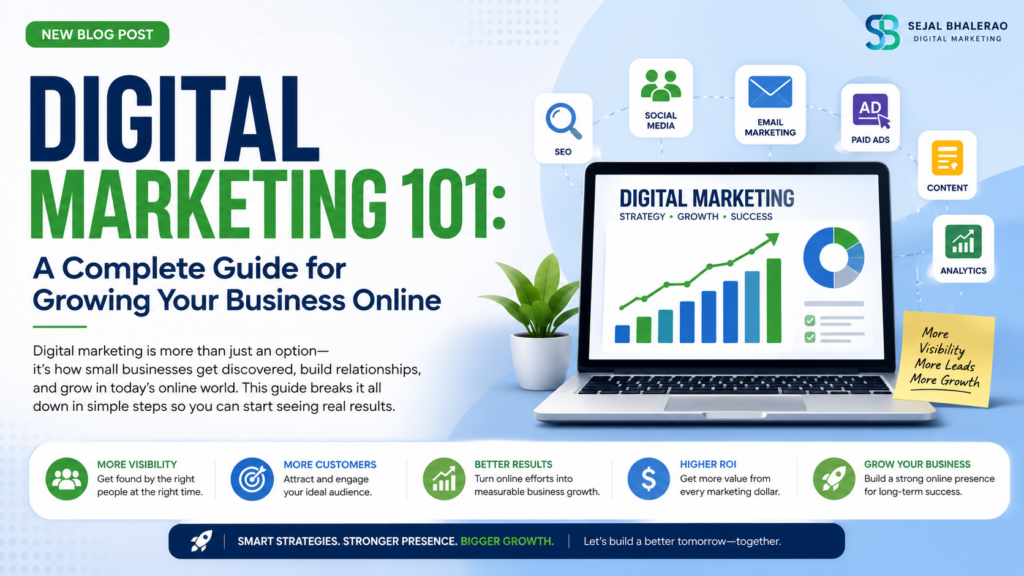
Digital marketing is one of the biggest drivers of business growth in 2026. Whether you’re a freelancer, a small business owner, or managing a growing company, having a strong online presence can help you reach more customers, build trust, and increase sales.
If you’re just getting started, don’t worry. Digital marketing doesn’t have to be complicated. This guide will walk you through the basics, explain why it matters, and show you how each part works together to grow your business.
What Is Digital Marketing?
Digital marketing is the process of promoting your business using the internet and digital platforms. Instead of relying only on newspapers, television, or billboards, businesses today connect with customers through search engines, websites, social media, email, and online advertising.
One of the biggest advantages of digital marketing is that you can reach the right audience, track your results, and improve your strategy based on real data.
Digital marketing includes several important areas, such as:
- Search Engine Optimization (SEO)
- Content Marketing
- Social Media Marketing
- Email Marketing
- Pay Per Click (PPC) Advertising
- Affiliate and Influencer Marketing
Each of these plays a unique role in helping your business grow online.
Why Digital Marketing Matters
Think about the last time you wanted to buy something or hire a service. Chances are you searched online, read reviews, visited a few websites, and compared different options before making a decision.
Your customers do exactly the same thing.
If your business isn’t showing up during that search, you’re missing valuable opportunities to connect with potential customers.
Digital marketing helps you:
- Reach people who are actively looking for your products or services
- Measure what is working and improve what isn’t
- Compete with larger businesses without spending a huge budget
- Build trust through helpful content and consistent communication
- Generate quality leads and long term customers
The Core Pillars of Digital Marketing
1. Search Engine Optimization (SEO)
SEO helps your website appear higher in search engine results without paying for advertisements.
When someone searches for a product or service related to your business, good SEO increases the chances of your website appearing on the first page.
SEO includes:
- Optimizing page titles, headings, and website content
- Improving website speed and mobile friendliness
- Building backlinks from trusted websites
- Creating valuable content that answers customer questions
SEO takes time, but it is one of the most effective ways to generate consistent, long term traffic.
2. Content Marketing
Content marketing is about creating useful content that helps your audience.
This could include blog posts, videos, guides, FAQs, infographics, or case studies.
Instead of constantly trying to sell, you’re providing information that solves problems and answers questions. Over time, this builds trust and positions your business as an expert in your industry.
Great content also improves your SEO because search engines reward websites that publish valuable and relevant information.
3. Social Media Marketing
Social media gives your business a chance to connect with people on a more personal level.
Platforms like Facebook, Instagram, LinkedIn, and X allow you to share updates, educate your audience, showcase your work, and interact directly with potential customers.
You don’t need to post every day. Being consistent and engaging with your audience is much more valuable than posting frequently without a clear purpose.
4. Email Marketing
Email marketing continues to deliver one of the highest returns on investment in digital marketing.
Whether you’re sending newsletters, special offers, or automated welcome emails, staying connected with your audience helps build stronger relationships and encourages repeat business.
A simple email can remind customers about your brand and keep them engaged long after they visit your website.
5. Pay Per Click (PPC) Advertising
PPC advertising allows your business to appear instantly in search results or on social media through paid campaigns.
Platforms like Google Ads and Meta Ads let you target specific audiences based on their interests, location, and online behavior.
While SEO focuses on long term organic growth, PPC helps you generate immediate traffic and leads.
Many successful businesses use both strategies together for the best results.
How These Channels Work Together
Digital marketing works best when all the channels support one another.
For example, you can write a helpful blog post that targets an important keyword through SEO. You can then share that blog on social media to attract more visitors. Those visitors may subscribe to your email list so they can receive more useful content. If they leave your website without making a purchase, a PPC campaign can remind them about your business and encourage them to come back.
When these strategies work together, they create a stronger online presence and deliver better results over time.
Five Simple Steps to Get Started
If you’re new to digital marketing, start with these simple steps:
- Understand who your ideal customers are.
- Make sure your website is fast, mobile friendly, and easy to navigate.
- Focus on one or two marketing channels before expanding.
- Create a content calendar and publish consistently.
- Monitor your performance using tools like Google Analytics and Google Search Console.
Small, consistent improvements will always outperform trying to do everything at once.
Final Thoughts
Digital marketing is not about following every trend or being active on every platform. It’s about understanding your audience, providing value, and building meaningful relationships over time.
Start with the basics, keep learning, and stay consistent. Every optimized webpage, every helpful blog post, every social media update, and every genuine interaction brings you one step closer to growing your business online.
Success doesn’t happen overnight, but with the right strategy and consistent effort, digital marketing can become one of the most valuable investments you make for your business.