
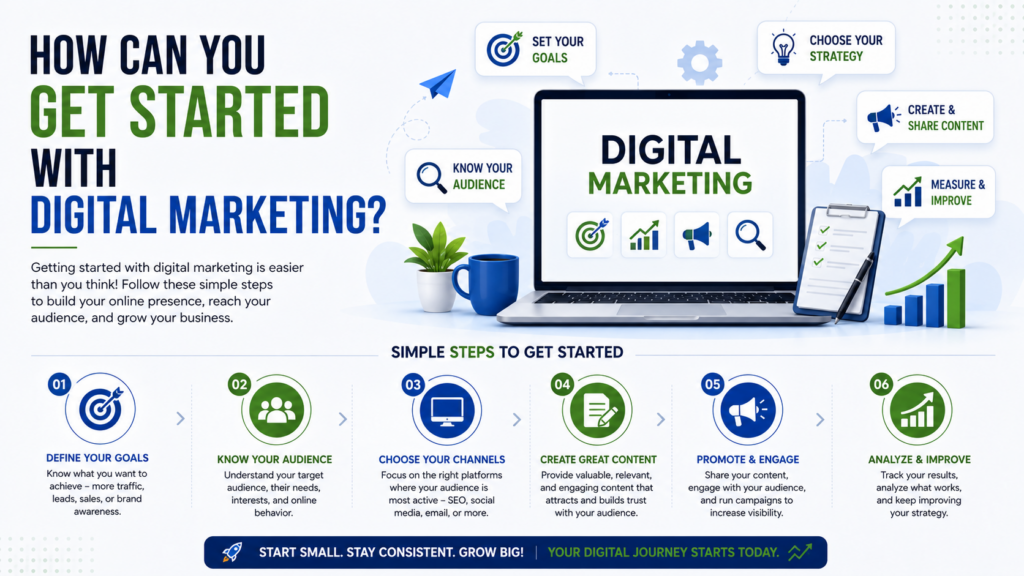
Getting started with digital marketing can seem confusing at first. With so many platforms, tools, and strategies available, it’s easy to feel unsure about where to begin. The good news is that you don’t need to master everything at once. Starting with a simple plan and staying consistent will help you build a strong online presence and achieve long term results.
1. Set Clear Goals
Before choosing any marketing strategy, decide what you want to achieve. Your goals will guide every decision you make.
Some common goals include:
- Increase website traffic
- Get more local customers
- Build brand awareness
- Generate quality leads
- Boost online sales
- Grow your email subscribers
When you know your goal, it becomes much easier to choose the right marketing channels.
2. Understand Your Target Audience
Successful digital marketing starts with knowing your audience. Take time to understand who your ideal customers are and what they need.
Ask yourself:
- What problems are they trying to solve?
- Which social media platforms do they use?
- What information do they search for before making a purchase?
The better you understand your audience, the more effective your marketing will be.
3. Build a Professional Website
Your website is the foundation of your digital marketing efforts. Every campaign should lead visitors to a website that is easy to use and designed to convert.
Make sure your website is:
- Fast loading
- Mobile friendly
- Easy to navigate
- Optimized for SEO
- Equipped with clear calls to action
A professional website creates trust and helps turn visitors into customers.
4. Optimize Your Google Business Profile
If you run a local business, creating and optimizing your Google Business Profile is one of the easiest ways to increase visibility.
Keep your profile updated by:
- Adding accurate business information
- Uploading high quality photos
- Responding to customer reviews
- Updating business hours and services regularly
A complete profile improves your chances of appearing in local search results and Google Maps.
5. Focus on One or Two Marketing Channels
You don’t need to be active on every platform from day one. Start with the channels that best match your business and audience.
For example:
- Local businesses can focus on Local SEO and Google Business Profile.
- E commerce businesses can start with Social Media Marketing and Google Ads.
- Service based businesses can use SEO, content marketing, and email marketing.
Once you see results, you can gradually expand your strategy.
6. Create Valuable Content
Content helps build trust and attracts potential customers. Instead of posting randomly, create content that answers common customer questions and solves real problems.
You can publish:
- Blog articles
- Social media posts
- Videos
- Infographics
- Email newsletters
Consistency is more important than posting every day.
7. Track Your Results
Measuring performance helps you understand what is working and what needs improvement.
Use tools like:
- Google Analytics
- Google Search Console
- Google Business Profile Insights
- Social media analytics
Review your data regularly and adjust your strategy based on real results.
8. Stay Consistent
Digital marketing is a long term investment. Results rarely happen overnight, especially with SEO and content marketing. Businesses that stay consistent with their efforts are more likely to build lasting visibility, attract quality leads, and grow steadily over time.
Final Thoughts
Starting digital marketing doesn’t have to be complicated or expensive. Begin with clear goals, understand your audience, build a strong website, optimize your Google Business Profile, and focus on one or two marketing channels. Create helpful content, monitor your performance, and stay consistent. Small, steady improvements over time often lead to the biggest business growth.