
Launching a digital marketing campaign is an exciting step, but creating campaigns is only part of the journey. The real success comes from understanding what’s working, what needs improvement, and where your marketing budget is delivering the best return. By tracking the right metrics, you can make smarter decisions and grow your business with confidence.
Start with Clear Goals
Before measuring results, decide what you want to achieve. Having clear goals gives your marketing direction and makes it easier to evaluate success.
Your goals might include:
- Increasing website traffic
- Generating more leads
- Growing your email subscribers
- Boosting online sales
- Improving brand awareness
- Getting more local customers
The more specific your goals are, the easier it becomes to measure your progress.
Track the Right Metrics
Every digital marketing channel has different indicators of success. Instead of focusing on everything, track the metrics that matter most for your business.
Website and SEO
If your goal is to increase organic traffic, pay attention to:
- Organic website traffic
- Keyword rankings
- Bounce rate
- Average session duration
- Pages viewed per visit
These metrics show how easily people find your website and how engaged they are after arriving.
Content Marketing
Great content should educate, attract, and convert visitors. Monitor:
- Blog page views
- Time spent reading articles
- Social shares
- Leads generated through content
- Downloads of guides or resources
These insights help you understand which topics your audience finds most valuable.
Social Media Marketing
Social media success isn’t only about gaining followers. Focus on meaningful engagement.
Important metrics include:
- Engagement rate
- Reach and impressions
- Profile visits
- Website clicks
- Follower growth
A smaller but highly engaged audience often delivers better business results than a large inactive one.
Email Marketing
Email marketing remains one of the highest returning digital marketing channels. Keep an eye on:
- Open rate
- Click through rate
- Conversion rate
- Unsubscribe rate
- Email list growth
These numbers reveal how valuable your emails are to your subscribers.
Paid Advertising
If you’re running Google Ads or social media ads, monitor:
- Click through rate
- Cost per click
- Cost per conversion
- Conversion rate
- Return on ad spend
These metrics help you understand whether your advertising budget is being spent effectively.
Focus on Business Results
It’s easy to get excited about likes, followers, or page views, but these numbers don’t always translate into business growth.
Instead, ask questions like:
- How many leads did this campaign generate?
- How many visitors became customers?
- How much revenue came from this marketing effort?
- Which channel delivered the highest return?
These answers provide a much clearer picture of your marketing performance.
Understand Your Conversion Rate
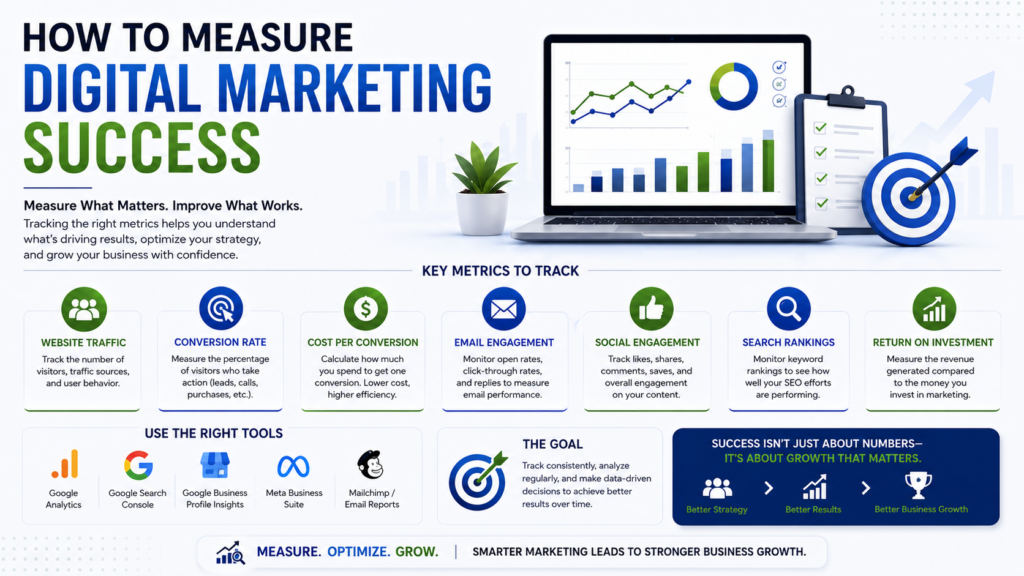
One of the most valuable digital marketing metrics is your conversion rate. It measures the percentage of visitors who complete a desired action, such as making a purchase, submitting a contact form, booking a consultation, or signing up for a newsletter.
A high conversion rate usually indicates that your marketing, website, and customer experience are working together effectively.
Use Free Analytics Tools
You don’t need expensive software to start measuring success. Several free tools provide valuable insights.
Popular tools include:
- Google Analytics
- Google Search Console
- Google Business Profile Insights
- Meta Business Suite
- Email marketing analytics
Setting these up early allows you to track your progress over time and make better decisions based on real data.
Review Your Performance Regularly
Digital marketing is not something you set up once and forget. Schedule regular performance reviews to see what’s improving and what needs attention.
During each review, ask yourself:
- Which campaigns delivered the best results?
- Which content attracted the most visitors?
- Which marketing channel generated the most leads?
- Where can I improve next month?
Small improvements made consistently can lead to significant long term growth.
Be Patient and Keep Improving
Some digital marketing strategies produce quick results, while others take time to build momentum. Paid advertising may generate leads within days, but SEO and content marketing often require several months before showing meaningful growth.
Stay consistent, continue testing new ideas, and use your data to improve your strategy over time.
Final Thoughts
Measuring digital marketing success is not about tracking every number available. It’s about focusing on the metrics that support your business goals. By setting clear objectives, monitoring the right performance indicators, and reviewing your results regularly, you can make informed decisions that improve your marketing and help your business grow. Every campaign becomes an opportunity to learn, optimize, and achieve even better results in the future.